
The Solar System
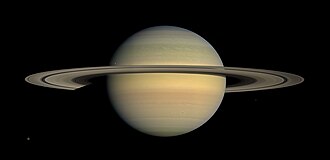
The Sun, eight planets, the dwarf planets, the Kuiper belt and the Oort cloud — and how far apart they really are.
The lives of stars
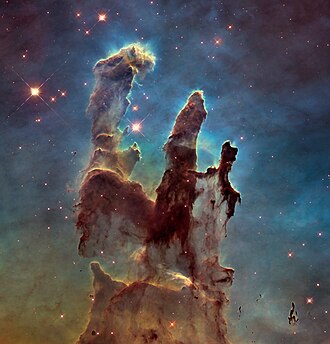
Stellar nurseries, the Hertzsprung–Russell diagram, nucleosynthesis, red giants, planetary nebulae, white dwarfs, black holes, Cepheid variables and the case for dark matter.
Galaxies and the large-scale universe
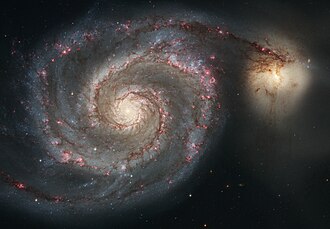
How galaxies form, move and change, and the filaments and voids that make up the cosmic web.
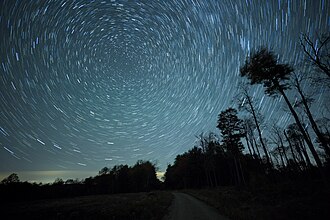
Sky coordinates
How astronomers give every object an address — and the precession, nutation and proper motion that slowly move them.
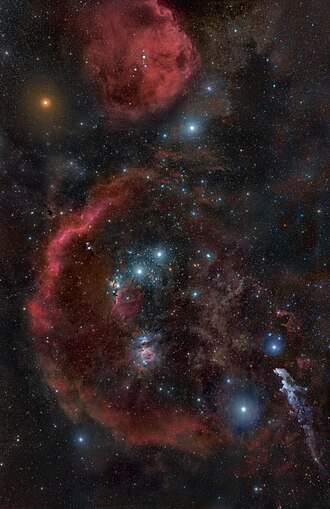
Constellations and the seasons
The 88 constellations, the thirteen the Sun passes through, and why each season brings its own night sky.
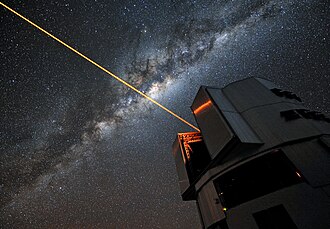
Observational astronomy
The spectrum of light, and the telescopes and instruments — optical, radio, solar and in space — that we use to read it.
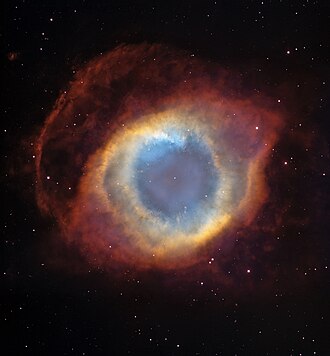
Gallery
Deep-sky images from a backyard in New Jersey: the full Messier catalog and a growing NGC collection.
A sense of scale before we begin
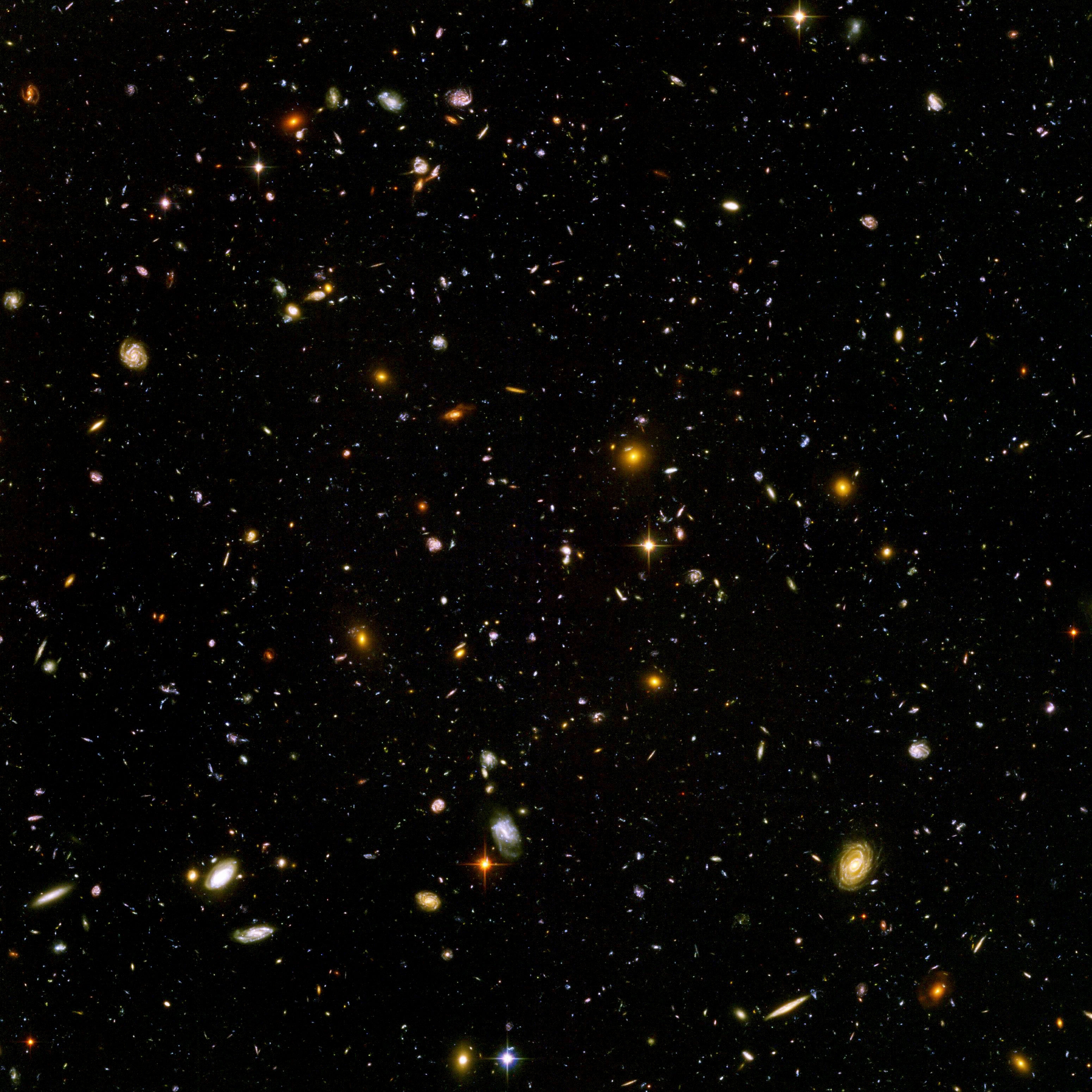
Light takes eight minutes to reach Earth from the Sun, four hours to reach Neptune, and more than a year to clear the Oort cloud. The next star is four years away at that speed. The centre of the Milky Way is about 26,000 years away; the Andromeda Galaxy, 2.5 million. The faintest galaxies in the image above sent their light toward us some 13 billion years ago.
This site works outward along that path. It begins with our own Solar System and the Sun, moves on to how stars are born, live and die, and then to galaxies and the expanding universe. Two pages bring it back to the backyard: how astronomers map the sky and how it slowly shifts, and the constellations and the seasons; another explains the telescopes and instruments used to observe it all. The Gallery holds deep-sky photographs taken from New Jersey, with a catalog and observing planner for anyone who wants to look for themselves.
- Sun to Earth
- 8.3 light-minutes
- Sun to Neptune
- 4.2 light-hours
- Edge of Oort cloud
- ~1–1.5 light-years
- Nearest star
- 4.2 light-years
- Galactic centre
- ~26,000 light-years
- Andromeda
- 2.5 million light-years
Image credits
- Hubble Ultra Deep Field (page header) — NASA/ESA. Public Domain. Source
- Saturn at equinox (Cassini) — NASA/JPL/Space Science Institute. Public Domain. Source
- Pillars of Creation, M16 (Hubble) — NASA/ESA/Hubble. Public Domain. Source
- Whirlpool Galaxy, M51 (Hubble) — NASA/ESA/S. Beckwith/Hubble Heritage. Public Domain. Source
- Star trails around the north celestial pole, Pennsylvania — Tyler Savitski. CC BY-SA 4.0. Source
- Orion, head to toe — Rogelio Bernal Andreo. CC BY-SA 3.0. Source
- Laser guide star at the Very Large Telescope — ESO/G. Hüdepohl. CC BY 4.0. Source
- Helix Nebula, NGC 7293 (Hubble) — NASA/ESA/C. R. O'Dell. Public Domain. Source


